Willy
Xiao
Engineering
Manager
I ended up at Cognition through a chance encounter at a restaurant in San Jose. Scott was having dinner with his older brother, whom I knew from college, and they came over to say hi. I mentioned that I was about to join another company in the industry on Monday (it was the week before). Scott told me I should come see Cognition first.
Skeptical but intrigued, I walked into the San Francisco office two days later. A dozen people were gathered around the long dinner tables playing “Catfishing,” a game where you guess a Wikipedia article from its categories. Someone called out, “1973 debut albums. Virgin Records. Mike Oldfield,” and another person immediately yelled, “Tubular Bells!”
What the hell were Tubular Bells? I had no idea, but this group seemed to know an astonishing amount about everything. A few questions later, RSA numbers came up, and Eric Lu casually mentioned he had been factoring numbers as a hobby for a decade. The group launched into a debate about the opportunity for AI to push mathematics forward. And just a few months later, Eric used a swarm of Devins to factor RSA-260 as a side project! Every conversation carried the same infectious energy: endless curiosity, strong opinions, and a genuine excitement to build.
This wasn’t the “9-9-6” I had heard about from the outside.
The intensity was obvious, but so was the joy. People worked hard because they genuinely loved what they did.
After one office visit and many conversations with Scott, I ultimately decided to join Cognition instead.
Imposter syndrome struck immediately. I was a full-stack engineer with ten years of experience, not a competitive programmer or AI researcher. So I asked Scott: What exactly do you need me to do?
Execute, he said. We need people who have seen this before.
I joined to lead our Cloud Product team – but “Engineering Manager” here doesn’t mean stepping away from the work. I set direction, build the team, and still ship alongside it. There’s no clean line between management and IC work; the most important problem belongs to whoever can solve it.
And increasingly, everyone at Cognition is becoming a manager – of their own swarm of Devins!
You can see it in our Slack channels. When someone posts an issue, a triage Devin with context from the channel can investigate, determine which other Devin should pick it up, or identify the person who wrote the relevant PR. Instead of moving slowly through layers of human coordination, the problem can go straight to its source.
No one asked, How have companies traditionally handled triage? That’s one advantage of Cognition’s youth. Some of my teammates actually joined straight from high school or college; last week, we threw a going-away party for an early employee taking a semester off from Cog to try college. Yes, you read that right.
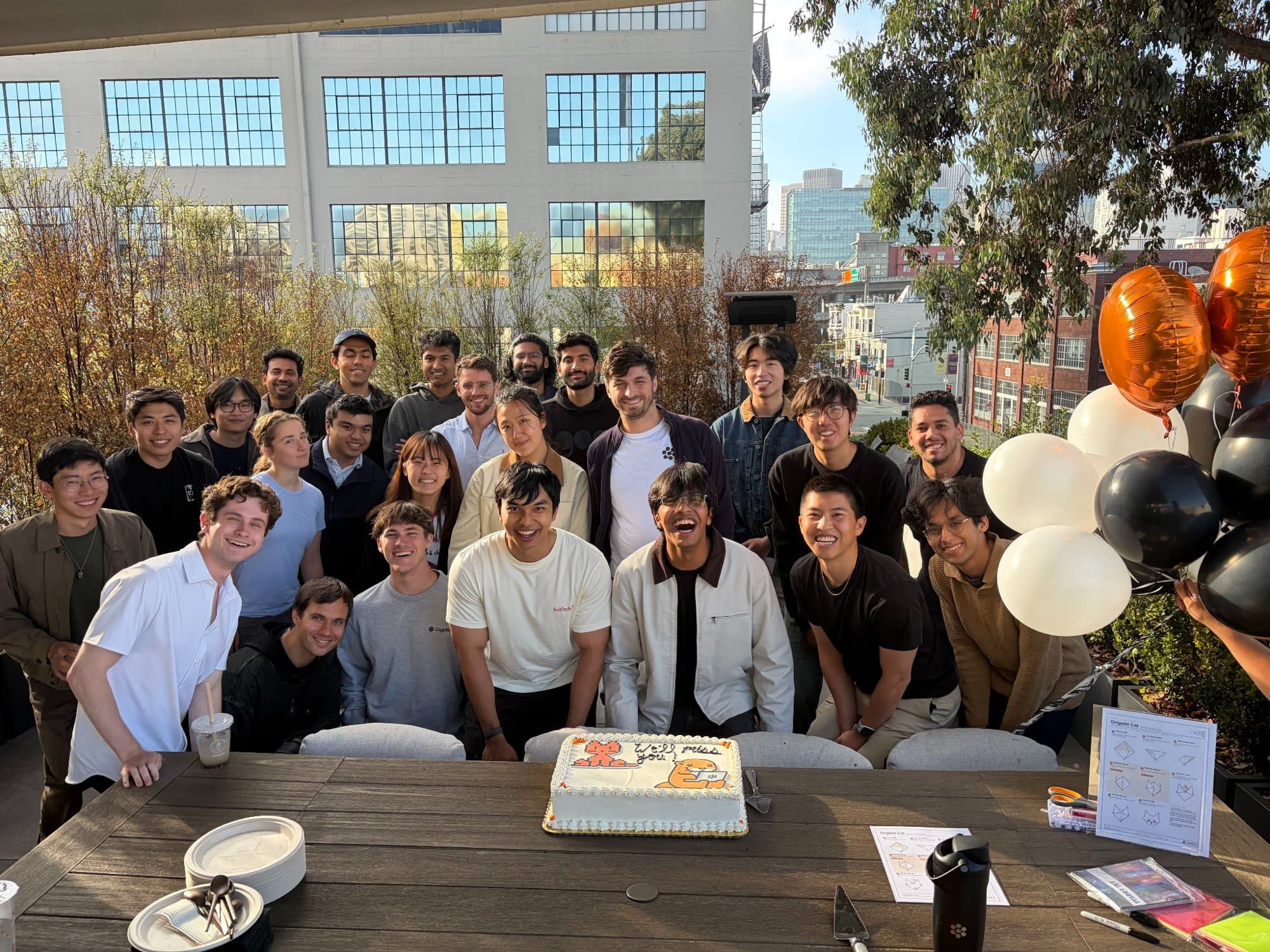
They haven’t spent years burdened by the “correct” way to review code, deploy a product, or structure a team. By questioning assumptions, they find their way to entirely new ideas.
One night, a few of us were sitting together with a handful of Devins running in the background. An engineer swiveled around and said, “Wait. What if we could make Fable as cheap as Opus?”
My first instinct was to list all the reasons it might not work – the architectural constraints, failure modes, and the fact that the economics seemed impossible. But before I could finish, someone had spun up another Devin to test it. Within minutes, everyone was out of their chairs, pressure-testing versions of the idea: What if we did this? What would break? Could it work across the entire product? By the end of the night, we had the beginnings of Devin Fusion.
That moment captured what I’m learning here: experience is valuable, but only if you know which lessons to keep, and which old assumptions to leave behind.
A lot of our roadmap emerges from moments like that. Devin handles more of the execution, giving us room to look up from our screens, turn around, and imagine what should exist next. It reminds me a little of college: staying up too late with people you love being around, shooting the shit about an idea because you’re too excited to stop.
I want to be part of those nights. Yet I also have a newborn at home!
Some nights, I stay because a conversation is too interesting to leave. Others, I head home for bedtime and log back on later. No one hands me a schedule or tells me what commitment is supposed to look like. I’m trusted to know when my team needs me, and when my family does.
The two sides of my life overlap more than I expected. Friends and partners come to the office. We stop for birthdays, celebrate new babies, and show up for one another’s wins. My family at work even made sure my family at home had the right uniform.

None of that makes Cognition a “chill” company. We’re operating in arguably the most competitive space in the world.
But the ambition isn’t imposed from the top; it’s how the people here are wired. We are here to win.